10 Powerful Reasons a Home Inspection Protects Your Investment
Table of Contents
Buying a home is one of the biggest financial decisions anyone makes, and a home inspection is one of the smartest steps in that journey. It gives buyers a clear snapshot of a property’s condition and helps uncover issues that might otherwise go unnoticed. By spotting hidden problems early, you can make better decisions, negotiate confidently, and safeguard your long-term investment.
What Is a Home Inspection?
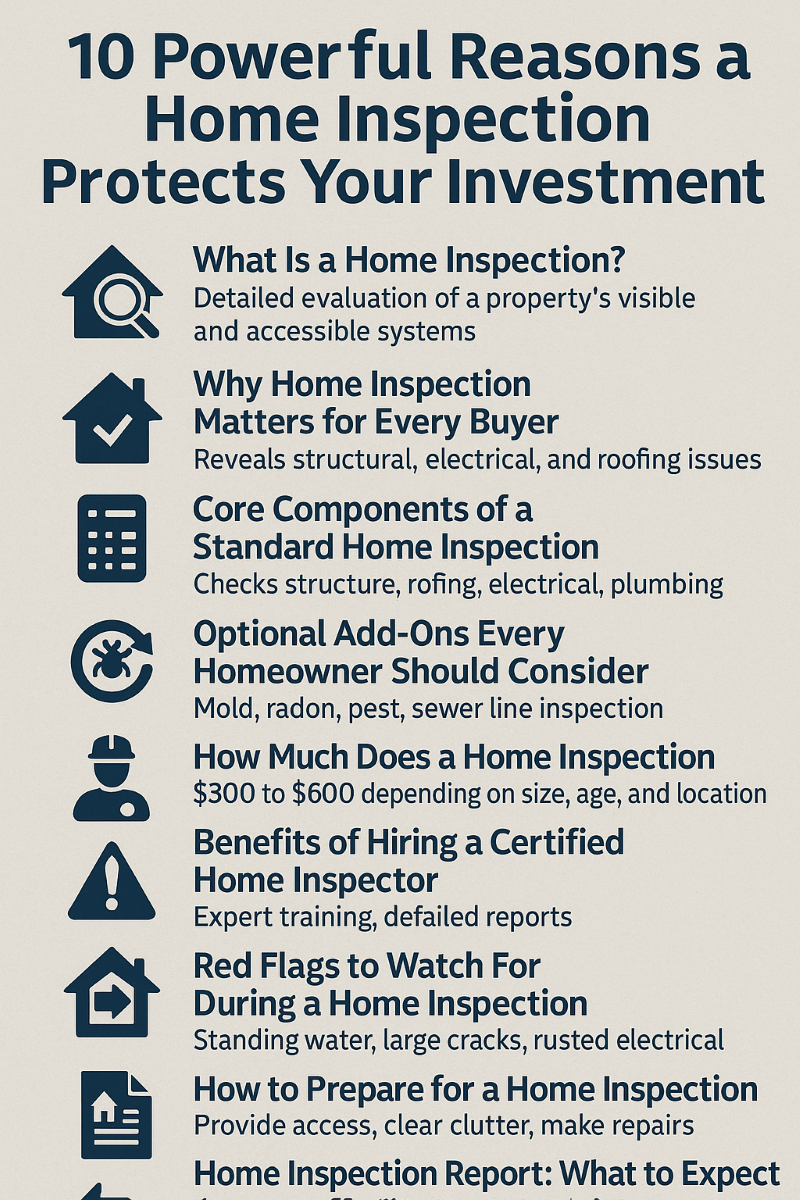
A home inspection is a detailed evaluation of a property’s visible and accessible systems. Inspectors check everything from the roof to the foundation to determine whether the home is safe, functional, and free from major defects.
This step usually takes two to four hours and ends with a written inspection report that highlights findings, recommendations, and potential repair costs. Buyers rely on this information to make more confident choices before closing.
Why Home Inspection Matters for Every Buyer
A home inspection saves buyers money, prevents surprises, and supports smart negotiations. Beyond surface-level appearances, it reveals structural issues, worn-out electrical components, plumbing leaks, or roofing deterioration—problems that could cost thousands if left untreated.
A home inspection protects:
- Safety — identifying fire risks, mold, or structural weaknesses
- Finances — avoiding unexpected repair bills
- Peace of mind — making sure the property is move-in ready
Core Components of a Standard Home Inspection
Inspectors move through the property systematically, checking every major system:
Structural Assessment
The structure is the backbone of the home. Inspectors review:
- Foundation stability
- Framing alignment
- Wall integrity
- Floors and ceilings
They look for cracks, settling, moisture intrusion, and other issues that could compromise safety.
Roofing Evaluation
The roof protects the home from the elements. Inspectors examine:
- Shingles
- Flashing
- Gutters
- Signs of leaks or deterioration
A faulty roof can cost thousands to replace, so early detection is crucial.
Electrical System Review
Electrical issues can be dangerous. Inspectors check:
- Wiring quality
- Panel condition
- GFCI/AFCI protection
- Overloaded circuits
This helps prevent potential fire hazards.
Plumbing Inspection
Plumbing problems can lead to costly water damage. Inspectors look at:
- Visible pipes
- Water heaters
- Drainage systems
- Water pressure
Any moisture issues are flagged for repair.
Optional Add-Ons Every Homeowner Should Consider
Beyond the standard inspection, additional testing can provide deeper insights:
- Mold inspection
- Radon testing
- Pest inspection
- Sewer line camera scan
- Asbestos testing
These add-ons offer extra layers of protection, especially for older homes.
How Much Does a Home Inspection Cost?
Most home inspections cost between $300 and $600, depending on the home’s size, age, and location. Specialized testing may increase the cost, but the investment often saves buyers significantly more in the long run.
For more detailed data, check reputable sources like the American Society of Home Inspectors (ASHI):
? https://www.homeinspector.org/
Benefits of Hiring a Certified Home Inspector
Certified inspectors bring:
- Training and industry-standard protocols
- Professional tools
- Clear, easy-to-read reports
- Strong ethical guidelines
This ensures accurate and trustworthy results.
Red Flags to Watch For During a Home Inspection
Certain issues require immediate attention:
- Standing water in the basement
- Large cracks in walls
- Rusted electrical components
- Strong mold or mildew smell
- Sagging roof lines
These may signal deeper structural or safety problems.
How to Prepare for a Home Inspection
Sellers can speed things up by:
- Providing full access to all rooms
- Clearing clutter
- Replacing blown bulbs
- Unlocking utility closets
- Fixing simple items like leaks or loose hinges
Preparation leads to a smoother inspection.
Home Inspection Report: What to Expect
The inspector’s report includes:
- Summary of major findings
- Photos of defects
- Safety concerns
- Recommended repairs
- Estimated timelines
Buyers should review the report carefully and ask questions if anything seems unclear.
Common Misconceptions About Home Inspections
Myth 1: Inspectors predict the future — They don’t.
Myth 2: A perfect report means no future repairs — All homes need maintenance.
Myth 3: New homes don’t need inspections — They often have construction defects.
Home Inspection vs. Appraisal — What’s the Difference?
A home inspection focuses on condition.
An appraisal focuses on value.
Lenders require appraisals—not inspections—but both serve important roles in the buying process.
FAQs About Home Inspection
1. How long does a home inspection take?
Most inspections take 2–4 hours, depending on the home’s size.
2. Should buyers attend the inspection?
Yes, attending helps buyers understand the property better.
3. Can a home fail an inspection?
No, inspectors simply report conditions—they don’t pass or fail homes.
4. What if problems are found?
Buyers can negotiate, request repairs, or walk away.
5. Is a home inspection required?
Not by law, but it’s highly recommended.
6. How soon do buyers receive the report?
Most inspectors deliver it within 24 hours.
Conclusion
A home inspection is one of the smartest investments buyers can make. By uncovering hidden issues, outlining repair needs, and improving peace of mind, inspections help buyers make informed decisions and protect their long-term financial well-being. Whether you’re buying, selling, or maintaining a property, a home inspection is a must-have step for safety and confidence.
