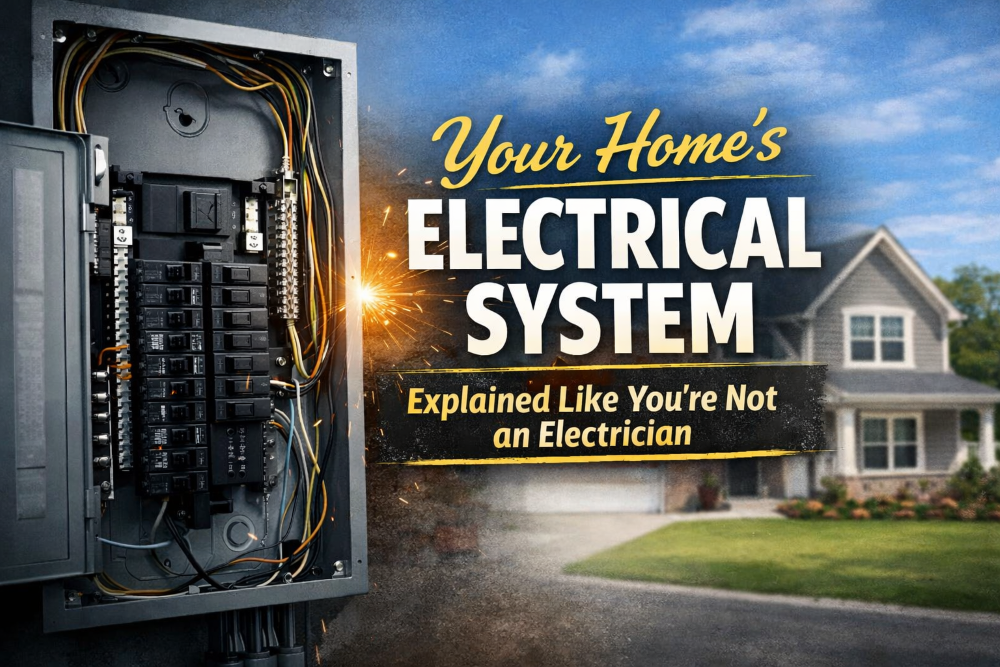
Your Home’s Electrical System,
Explained Like You’re Not an Electrician
Most homeowners know just enough about electricity to be uncomfortable.
Lights turn on. Breakers trip. Outlets work. And somewhere in the basement is a gray metal box everyone avoids like it might bite.
This guide explains how your home electrical system works in plain English. No electrician jargon. No scare tactics. Just practical knowledge every Michigan homeowner should have.
Table of Contents
Where Your Home’s Electricity Comes From
In Michigan homes, electricity typically enters through an overhead service drop or underground service line from the utility company.
From there, power flows into your main electrical panel, usually located in a basement, garage, or utility room.
Every outlet, light, appliance, and mechanical system in your house gets its power from this one panel. If the panel has a problem, everything downstream can be affected.
The Main Electrical Panel.
The Control Center of Your House
Your electrical panel does three critical things:
- Distributes power throughout the home
- Protects wiring from overheating
- Allows safe shutoff during emergencies or maintenance
Each breaker protects a specific circuit. Bedrooms, kitchen outlets, furnace, air conditioning, garage, and laundry are usually on separate breakers.
When a breaker trips, it is doing its job. It means something unsafe was starting to happen.
Hot, Neutral, and Ground.
What Those Wires Actually Do
This is one of the most common sources of confusion for homeowners.
Hot Wire
Carries electricity from the panel to outlets, lights, and appliances. This wire is energized and dangerous to touch.
Neutral Wire
Carries electricity back to the panel after it has been used. This completes the circuit.
Ground Wire
This is a safety path. Under normal conditions, it carries no electricity. It only activates when something goes wrong.
Simple version:
- Hot delivers power
- Neutral returns power
- Ground protects people and equipment
Why Breakers Trip in Michigan Homes
Breakers trip for a reason. Common causes include:
- Too many devices on one circuit
- Space heaters or window AC units
- Short circuits
- Ground faults
- Loose wiring
- Failing appliances
One trip occasionally is normal. Breakers that trip repeatedly are a sign something needs attention.
GFCI and AFCI Protection. Why Newer Homes Have More of Them
GFCI Outlets
Required in kitchens, bathrooms, garages, basements, laundry areas, and outdoors.
They protect people from shock, especially where water is present.
AFCI Breakers
Common in newer Michigan homes and panel upgrades.
They protect the house by detecting dangerous arcing that can cause electrical fires inside walls.
They can be sensitive. They are still worth having.
Why Neutral and Ground Are Only Connected in One Place
Neutral and ground are bonded together only at the main service panel.
Everywhere else, including subpanels, they must be kept separate.
Why this matters:
- Neutral carries current during normal operation
- Ground should only carry current during a fault
If they are bonded in multiple locations, electricity can travel on metal parts of the home like conduit, appliance frames, or plumbing. That creates shock hazards and improper system behavior.
This is a very common DIY electrical mistake and something home inspectors in Michigan look for closely.
Older Michigan Homes vs Modern Electrical Systems
Many Michigan homes were built long before modern electrical demands existed.
Common differences in older homes:
- Fewer circuits
- No GFCI or AFCI protection
- Older electrical panels
- Aluminum wiring in certain eras
- Outdated grounding methods
An older system is not automatically unsafe, but it may not meet modern expectations for safety and load capacity.
Electrical Warning Signs Homeowners Should Never Ignore
Contact a qualified electrician if you notice:
- Burning or fishy odors
- Warm outlets or switches
- Flickering lights that are getting worse
- Breakers that will not reset
- Tingling when touching metal fixtures
- Buzzing or crackling from the panel
Electrical systems usually give warning signs before serious damage occurs.
How a Michigan Home Inspection Helps
A home inspection is a visual, non invasive evaluation of the electrical system.
It helps by:
- Identifying safety hazards
- Noting improper wiring or bonding
- Flagging outdated or recalled panels
- Explaining system limitations
- Helping buyers understand what they are purchasing
The goal is clarity, not fear.
Final Thought for Homeowners
You do not need to be an electrician to own a home. But understanding the basics of your electrical system helps you make better decisions, avoid dangerous DIY mistakes, and recognize when professional help is needed.
Electricity is not magic. It follows rules. Once you understand those rules, your house makes a lot more sense.

Inside the Box
Contact Us
Book an Inspection online
Learn more HERE with the IRC, the International Residential Code Book
- crawlspaces
- health risks in homes
- high-energy-bill
- inside the box home inspections
- Is your Inspector just a "Side Hustler"?
- michigan health risks
- Michigan Home Inspections = Wild West of Inspections
- save-money-on-power-bill
- utility-bill
- wjy-is-my-consumers-bill-so-high
Home Electrical System FAQ
Is my electrical panel outdated?
Possibly. Panels in older Michigan homes may still function but lack modern safety protections. Panels from certain manufacturers or with limited capacity can be a concern, especially if breakers trip often or feel loose.
Why do my breakers keep tripping?
Breakers trip when a circuit is overloaded, shorted, or experiencing a ground fault. Common causes include space heaters, window AC units, garage tools, or failing appliances. Repeated tripping should be evaluated.
Do I need GFCI outlets in Michigan?
Yes. GFCI protection is expected in kitchens, bathrooms, garages, basements, laundry areas, and outdoor outlets. They are designed to protect people from electric shock, especially around water.
What is the difference between a fuse box and a breaker panel?
Fuse boxes use replaceable fuses that melt when overloaded. Breaker panels reset after tripping. Fuse systems are not automatically unsafe, but they offer less convenience and often limited capacity.
Are flickering lights a serious problem?
Occasional flickering may be normal, but frequent or worsening flicker can indicate loose wiring, overloaded circuits, or issues with the electrical panel or utility service.
Why are neutral and ground only connected in the main panel?
Neutral carries current during normal operation. Ground is a safety path only. Connecting them in more than one place can allow current to flow on metal parts, creating shock hazards and improper electrical behavior.
Can I do my own electrical work?
Minor tasks like replacing outlets or light fixtures may be acceptable if done correctly. Work involving panels, new circuits, or grounding should be handled by a licensed electrician. Improper DIY work is a common inspection finding.
What electrical issues commonly come up during home inspections?
Missing GFCI protection, improper bonding, double-tapped breakers, outdated panels, aluminum wiring concerns, and unsafe DIY modifications are common findings in Michigan homes.
Will electrical issues fail a home inspection?
Home inspections do not pass or fail homes. Electrical safety issues are documented so buyers can make informed decisions or request repairs.