What is Thermal Imaging?
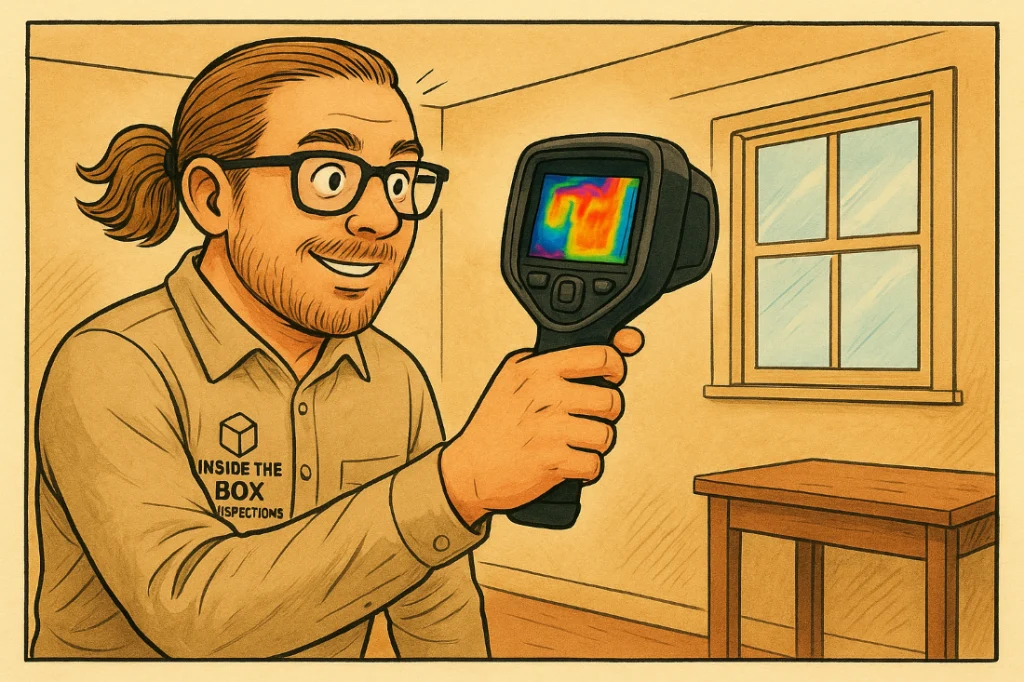
Every Inside the Box inspection comes with infrared thermal imaging cameras at no additional cost.
This technology allows us to “see” what the eye can’t — revealing hidden issues such as moisture intrusion, missing insulation, electrical hotspots, and air leaks.
Thermal imaging doesn’t replace a standard inspection, but it adds an extra layer of insight.
By scanning walls, ceilings, and electrical panels with an infrared camera, we can catch problems early, document them clearly, and help you avoid surprises down the road.
With ITB, you don’t pay extra for this — it’s part of our commitment to giving you the most thorough inspection possible.
Thermal Imaging FAQ
Thermal imaging can reveal problems that are completely invisible to the naked eye. Here’s everything homeowners and buyers want to know about this powerful tool.
Thermal imaging uses an infrared camera to detect temperature differences in surfaces. It helps identify issues like moisture, missing insulation, electrical overheating, air leaks, and hidden defects by showing heat patterns that the eye can’t see.
Thermal imaging can reveal: • hidden moisture inside walls or ceilings • missing or damaged insulation • electrical hotspots • air leaks around windows, doors, and attics • HVAC duct leaks • plumbing leaks • roof leaks (when conditions allow) • energy loss and cold spots It’s one of the best ways to catch problems early.
Yes. Unlike many inspectors who charge extra, Inside the Box uses thermal imaging as a standard part of the home inspection when it can provide useful information. I use it as needed to verify concerns, identify moisture, or evaluate energy loss.
Not directly. Thermal imaging can’t “see” mold, but it can detect temperature patterns and moisture that create the conditions for mold growth. It’s an excellent tool for finding hidden wet areas that may require mold or IAQ testing.
No. Thermal imaging doesn’t see “through” walls. It reads the surface temperature of materials, which reveals patterns caused by moisture, air movement, insulation voids, or electrical heat. It’s indirect, but incredibly effective.
Yes, but conditions matter. Thermal imaging works best when there is enough temperature difference between indoors and outdoors. Winter and cold days provide excellent imaging for insulation and air leaks. Moisture and electrical issues can be detected year-round.
Yes. It’s non-contact, non-invasive, and uses passive infrared. It does not emit radiation or affect electrical systems. It’s completely safe for people, pets, electronics, and structural components.
Yes. When thermal imaging reveals an issue, the report includes annotated thermal images along with standard photos. This gives buyers, sellers, and contractors clear evidence of what was found.
Yes. Thermal imaging can reveal electrical hotspots, overloaded breakers, loose connections, and overheating components. It’s one of the safest ways to detect electrical issues without opening up live systems beyond what is safe and standard.
It gives buyers peace of mind by identifying hidden defects, gives sellers proof of condition, and provides powerful documentation during negotiations. It often catches issues that would cost thousands if left undiscovered.
Want thermal images included in your inspection report?